Days Of Tamang

/ Friday, September 2, 2011 /
These are the name of Tamang Days:


Tamang(तामाङ) English
1) Dini Re (दिनी रे) Sunday
2) Lani Re (लानी रे) Monday
3)Mi Re(मी रे)  Tuesday
4) न्हाबेङ रे(Naben Re) Wednesday
5)Na Re (ना रे) Thursday
6)Sung Re (सुङ रे) Friday
7) Kam Re (काम रे) Saturday

Documentary about Buddha Boy (Dharma Sangha)

/ Sunday, August 28, 2011 /
I found this documentary about Dharma Sangha (Buddha boy Ram Bahadur Bomjan) which was broadcasted from Discovery Channel a few months ago.


Part One


Part Two


Part Three


Part Four


Part Five

Social Heroes of Tamang

/ Wednesday, April 20, 2011 /
Tamang society is well organised and formed. Every member has equal responsibility to their community. To keep alive, continues and dynamic social and cultural values of Tamang community they have divided different roles and duties to their members. They have to maintain their duty as per their post given by the society. These people are also known as ‘Social Heroes’ of Tamang community. They are Tamba, Lama, Ganba, Bonbo, Labonbo and Choho. These Heroes are described in short below:

  1. Tamba-Language initiator:  The meaning of ‘Tamba’ is ‘Language initiator’ in Tamang language. In Tamang language ‘Tam’ refers to ‘Language’ and ‘Ba’ refers to ‘person/subject or agentive marker. So ‘Tam-Ba’ means language initiator or language originator. Hence we can believe that Tamba had initiated the language. There is important role of Tamba in Tamang community. Specially to undertake the wedding ceremony role of Tamba is the most essential. He is the official person to undertake the wedding ceremony. He is the spoke person of Tamang community. Because of Tamba’s thoughts and philosophy about society Tamba is also known as ‘Social philosopher’.
  2. Lama-Buddhist priest/teacher:  Lama is enlightened person in Buddhism study and religious activities. Lama gives Buddhist teachings and undertakes religious ceremonies of Tamang community. Such as Funeral (Ghewa), Naming of new child etc.
  3. Bonbo-Priest to worship local gods/goddesses/nature worshiper: In other word Bonbo can be called as Herbal doctor. Because they have been treating sick people from thousands years. Bonbo keeps good knowledge of local herbs and provides treatment to people free of cost. Bonbo is nature worshiper and worships the nature, local gods, goddesses for the well being and prosperity of people.
  4. Labonbo/Laptaba-Ancestor’s worshiper: There is provision of priest to worship their ancestors in Tamang community. Tamang people of eastern part call it Labonbo or Labon where as Tamang people of western part call it Laptaba. Labonbo/Laptaba keeps alive tradition and history of their tribe by worshiping their ancestors. Each Hrui (Sub group) has their own Labon/Laptaba.
  5. Choho-Social manager/president: We can call it as Mayer or president of Tamang community. The main duty of Choho is to look after the community by making people feels of equality and humanity and keeping peace. He manages conflicts, solves problems of society as the leader of society. He is like a justice and takes decisions as per the need.
  6. Ganba-Adults/Social analyzer:  Ganba are the adult people of society. They have no direct responsibilities. But they observe the duties of other social heroes. They take part in group discussion. Without observation/advice of Ganba duties of social heroes can not be completed. We can compare Ganba with ‘Bujruk’ word of Urdu language.    
Reference: लोकतन्त्रमा तामाङ पहिचानका सन्दर्भहरु
By: Amrit Yonzan-Tamang

Tamang-Tibetan Names and meaning

/ Sunday, February 20, 2011 /
As most of the Himalayan people are Buddhist (Tibetan Buddhist) and there are many similar Cultures and rituals in those communities.  In Tamang community Lama gives the name to new baby in naming ceremony. Here I've found some of these names and their meaning:
Name Gender pronunciation Meaning
Akar

White Crystal
Amrita
F
Ambrosia
Anil
M
Air, Wind
Assam
M/F
Place in Tibbet
Basundhara
M
Tibetan goddess of prosperity
Boshay

Amber
Brag-Srin-mo
F
The ancestral goddess of Tibet
Ceba

Dear to hold
Celpa

apricot
Chodrak
Cheu-Dag
Dharma+sower
Choden
F cheu-den
The devout one
Choejor
cheu-djor
Dharma+wealth
Chogyal
M cheu-djal
Dharma+great/king
Chomo-Lung-Ma
F
Goddess mother of the Universe
Chophel
cheu-pel
Dharma+flourish
Cimba

Small
Dawa
M/F dah-ouah
Moon, Monday's child
Dechen
F
Health and happiness
Dhargay
dar-djay
Progress, development 
Diki
F
Health and wealthy
Dohna
F
A female diety
Dolkar
F
The name of Buddhist goddess
Dolama
F
The Tara with the 7 eyes
Dorje
M dor-djay
Indomitable, thunderbolt
Dorjne-Naljorma
F
The chief Tutelary goddess of Yoga 
Ekadzati
F
Goddess of the mystic cults and of wisdom 
Garkan

Dancer
Gephel
M
Increase of merit
Goba
M
Eagle
Gokarmo
F
A form of the mother goddess
Gu-lang
F
The protectress of mother and children
Gyaltsen
djel-tsen
Victroy Banner
Gyaltso
M
Ocean of enlightened qualities
Gyalwa
djal-wah
Victor
Hariti
F
The protectress of children
Indira
F
Lakshmi:female god, beauty and splendor 
Jalus

Rainbow
Jampa
djam-pah
Caring, Maitreya
Jampo

Gentle
Jamyang
F djam-yang
Gentle voice, Manjushree
Jangbu
M
Wise, skillful, learned, cleaver
Jangmu
F
Female form of Jangbu
Jetsan
M
King
Je-tsun
F
High born
Jigme
M djim-mey
Fearless
Jinpa
M/F djin-pa
Generosity
Jungney
djoon-ay
Source, origin
Kaba

Coffee
Kalden
M
Of the golden age
Kalsang
Kehl-sang
Good furtune
Kamala
M/F
Lotus
Karma
M/F
Activity
Kasa

Deer
Ketu

Comet
Keyuri
F
A Tibetan and Hindu cemetery goddess
Khadroma
Kah-droma
Celestial beings
Khalama
Kah-lama
Sky path
Khandro
Kah[n]-dro
Dakini, Angle
Khon-ma
F
The Tibetan mother of fiends
Kipu

Happy
Kitsi

Tickle
Kona

Exclusive
Kunchen
Keun-tshen
All-knowning
Kundun
M
The presence 
Kurukulla
F
Dances the rhythms of wisdom
Lasya
F
Goddess of beauty
Lhak-pa

Wednesday, planet mercury 
Lha-mi
F
A goddess
Lha-mo
Lah-mo
A fierce Buddha-protectress
Lhamu
F
A goddess
Lhundup
Houn-doop
Miraculous
Lobsang
M Law-sahng
Fine mind, disciple 
Michewa

Name for one of the heavens 
Mida
Pistol
Mingma
M
Born on Tuesday, planet mars 
Nam-kha

Spacious sky, essential space, energy of space
Nawang
M
The possessive one
Ngawang
Ngah-wahng
Powerful speech
Ngodup
nggo-dhup
Great achiever 
Nguntre
F
One of the three creator goddesses
Nima
M/F
Sun
Ningurre
F
One of the three creator goddesses
Niyima
M

Norbu
M Nor-bhoo
A precious gem
Nuba

Howl
Nyima
Nyee-ma
Sun
Pabu

Pufball
Palden
Pel-den
Spontaneously 
Pasang
M/F
Born of Friday, Planet venous 
Pema
F
A lotus 
Pemba
M
Born on Saturday, planet Saturn
Phuntsok
Poun-tsoh
Excellent
Popo

Lord
Poso

Glory
Prajnaparamita
F
The female Buddha, goddess of transcendental wisdom
Rabten
Rahb-
Steadfast, faithful
Rinchen
Rinn-tchenn
Treasure, precious 
Rizen
M/F
The holder of intellect 
Sangdhup
Samm-doup
Fulfillment 
Sangmu
F 
The kind hearted one
Sangs-rygas mkha
F
A rain goddess
Sangye
Sanjay
Buddha
Sashi

The world
Seba

Reward
Sengdroma
F
Goddess called upon as a protector of herds
Senge
M
Lion
Sengemo
F
Lioness
Sgeg-mo-ma
F
Goddess of beauty
Skamar

Star
Somba

Socks
Sonam
M/F Seu-namm
The fortunate one, meritorious, virtuous, merit
Tara
F
The mother goddess
Tashi
M/F Ta-shee
Prosperity, lucky, auspicious, good luck
Temba

Good
Tenzin
M/F Ten-dzinn
Protector of Dharma, keeper of bound/teaching
Tenzing
M/F 
Protector of Dharma
Thekchen
Tek-tchenn
Mahayana
Thokmay
Toh-mehy
Unhindered 
Tho-og
F
The mother goddess, first of the gods to exist
Thubten
Toup-tenn
Buddha's way
Torma

Magic stone 
Tsering
Tchay-ring
Long life
Tseten
Tseh-tenn
Stable life
Tsewang
Tseh-wahng
Empowered life
Ui Tango
F
One of the three creator goddesses
Wangchuk
Wong-tchouk
Powerful, mighty
Wangdak
Wahn-dak
Lordly, protector
Wangdue
Wahn-dou
Conqueror, subduer
Yangchen
F
The sacred one
Yeshe
M
Wise one
Yongten
Yonn-tenn
Virtuous life
Yum-chen-mo
F
Goddess of wisdom
Zapa

Friday
Zas-ster-ma-dmar-mo
F
Goddess of wealth
Zigsa

Snow leopard
Zonpa

Yong
Zopa

Patience 

Reference:Tibetan name

2847th Sonam Lhochhar celebration...

/ Wednesday, February 9, 2011 /
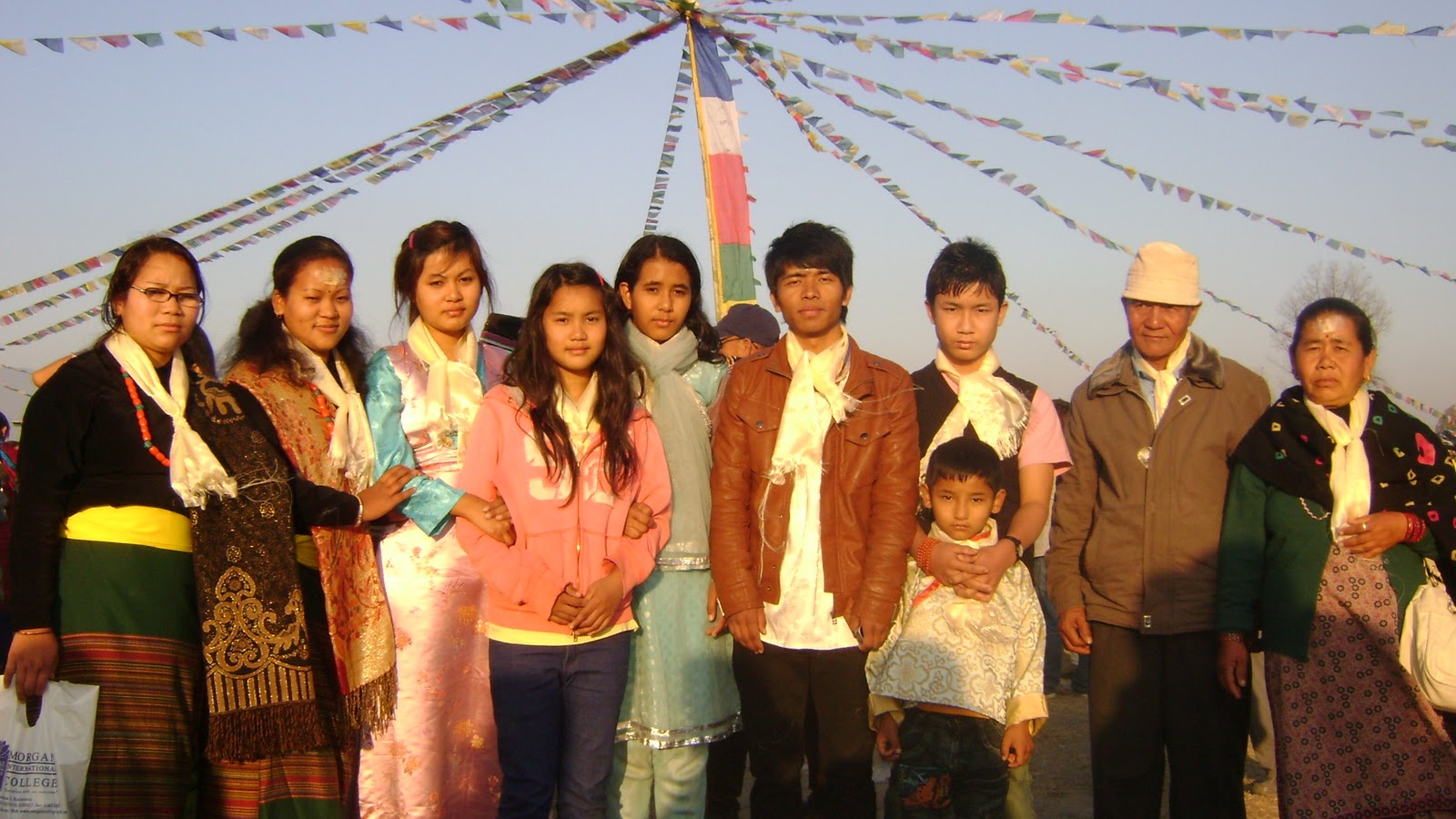
2847th Hyoi Sonam Lhochhar we celebrated in family gathering.That was really nice to see all family members and relatives after long time. Then we went to Tudikhel to see Lhochhar festival.....here are some snaps from lhochhar celebration of this year...
My nephew Pema having Tika from Chandra jyojyo.
Fyafullba: it is kind of greeting that we do for our seniors.
Sharing greet of Lhochhar Dolma nana and chandra jyojyo.
Bless you: niece Keshang having tika and khada.
Khanchi bhanji and chandra jyojyo.
our family and relatives in lhochar festival in tudikhel.....
Ghising family.........
  

ल्होछार र पहिचानको कुरा

/ Monday, January 31, 2011 /
जताततै उमंग छ । खुशीयाली छ । वौद्धिक वर्गमा बहस छ । संघ्-संस्थाहरु मिटिङ छलफलमा व्यस्त छ ।सोसियल नेट्वोर्कइङ वेबसाईटका भित्ताहरु शुभकामनाले भरिनु थालेको छ। हो, किन कि हाम्रो महानसांस्कृतिक पर्व ल्होछार हाम्रो घर अंगनमा आएको छ । घर आँगनहरु, गोन्पो, छ्योर्तेनहरु, घ्याङ्हरु सफा गरीनयाँ रंग रोगन गरी दर्ज्यू, लुङ्दाहरु फेर्ने बेला भएकोछ । आमा आपाको हतबाट निधारमा नौनी र कोकोम्हेन्दोको टिका लगाइ खाप्से खानुलाई मन हतारिसकेको छ । ल्होछार मेलामा गएर छमाछाम नाच्नुलाईगोडाहरु सलबलाई सकेको छ । गोन्पोमा गएर भगवान र लामा गुरुको वाङ लिनुछ । आहा! कती खुशीयाली, कती उमंग, कती रमाइलो! आफ्नो पुर्खाले साँची राखेको यो महान पर्वमा रमाउनु यो तामाङ मन कती प्रफुल्लछ । दिन गन्दै व्यग्र प्रतिक्षामा छ ल्होछारको । नयाँ गोइलो किन्नुलाई बजारमा जानुछ। नानाहरु सोलिमा सेलगेङ र आइरकको स्यालगार लिएर आउने छन ।
 ल्हो-वर्ष, छार्-नयाँ । साँच्चै नयाँ उमंग र ल्याउने ल्होछर । बाह्र वटा जिवजन्तुहरुको नामले गनिने ल्होछारले२८४७ वटा वर्षहरु पार गर्दैछ । हाम्रो सभ्यताको विशिष्ट ईतिहास बनाउदैछ । तिमी फलानो ल्हो, उ फलानो ल्हो, मो फलानो ल्हो भन्ने गरेको त मोइले पनि सम्झिन सक्ने भएदेखी नै थाहा पाएको हुँ । गाउँ घरको आखेहरुऔँलामा ल्हो गन्दै उमेर पत्ता लगाउँथ्यो (लगाउँछ) । ल्होको चक्र गन्दै को कती वर्षको भयो, कती वर्ष सानो, ठुलो पत्ता लगाउने चलन छ। सामान्यतया माघमा ल्हो फेरिन्छ । तामाङ समाजमा ल्हो र जन्मेको महिनावर्षको आधारमा उमेर गन्ने चलन छ । जस्तो: कोही व्यक्ती वैशाखमा जन्मेको छ भने माघ(ल्होछर) देखी अर्कोवर्षमा टेकेको मानिन्छ । जन्मेको महिनाको आधारमा वैशाखदेखी । यसरी हाम्रो सभ्यता र जीवनशैली बनेकोरहेछ ल्होछार । सम्भत: सबैभन्दा पुरानो मिती गन्ने चलन ल्होछार नै हुनु पर्छ । यसबाट हाम्रो सभ्यता रसंस्क्रिती कती पुरानो र ऐतिहासिक छ भन्ने थाहा पाईन्छ । दक्षिणपुर्वी एसियाको प्राय: सबै मुलुकमा चन्द्रपात्रोको प्रयोग हुनु र ल्होछर पनि यसैमा आधारित हुनुले यसले सिंगो दक्षिण पुर्वी एसियाको सभ्यता रसंस्कृतिको प्रतिनिधित्व गर्दछ । यसलाई दक्षिण पुर्वी एसियानहरुको(मङगोल मुलको) साझा संस्क्रिती र एकताको सुत्रको रुपमा लिनु सकिन्छ ।
 जानी नजानी हाम्रो जीवनको परीपुरक र अविछिन्न रहेको ल्होछार शब्दसँग भने पछी मात्र परिचित भएझैँ लाग्थ्यो । ल्होछार मान्नु पर्छ भन्ने कुराहरु सुन्दा के होला यो ल्होछार भन्ने जस्तो लाग्थ्यो । शायद, अरुलाई पनि त्यस्तै लागेको हुनुपर्छ । किन कि ल्होछार भनेर कुनै पर्व मनाउने चलन हाम्रो समाजमा थिएन । बुझ्दै जाँदा, चेतनाको आँखा खोल्दै जाँदा पत्ता पायो एक धर्म, एक भाषा र भेषको नीति लिएको यस देशको शासकहरुले निर्मम तरिकाले हाम्रो सामाजिक संरचना, जीवनशैली र संस्कृतिमाथि दमन गर्दै लगेको रहेछ । हिन्दूकरण र खस एक जातिय ज्यादातिले हाम्रो संस्क्रिती मौलिकता र पहिचानको समुल नष्ट हुने स्थितिको श्रीजना गरेको रहेछ । धन्न हाम्रो पुर्खाहरुले लुकिछिपी हाम्रो सभ्यताको धरोहरको जग भने जोगाइ राखेछन । आफ्नो पहिचान र संस्कृतिको माया कसलाई पो हुंदैन र! यसैको रक्षा र निरङ्कुशताबाट मुक्ती पाउन यस् देशक शोषित, पीडित आदिवासी, दलित वर्गले विभिन्न कालखन्डमा संघर्ष गर्दै आएको छ । कयौँ योद्धाहरुले मुक्ती लडाईंमा बलिदानी दिएर शहिद बने । जसको फलस्वरुप शासकहरुले आफ्नो जालोलाई बिस्तारइ खुकुलो पार्दै लानु वाध्य बनायो । हामी हाम्रो गुमेको पहिचान, ईतिहास, सभ्यता, संस्क्रिती अनी भुमिको खोजी गर्न थालयौँ । ल्होछार जस्तो महान र हाम्रो जीवनको अभिन्न परम्पराको निरन्तरता र मनाउनु पाउनु हाम्रो जन्मसिद्ध अधिकार रहेको कुराहरु बिस्तारै हाम्रो समाजमा जाग्रित हुँदै गयो । सांस्क्रिती सामाजिक आन्दोलनको यो अभियानमा अग्रिणी संस्था नेपाल तामाङ घेदुङको भूमिका हामीले बिर्सनु  हुँदैन । जसको पहलमा २०५१ सालदेखी ल्होछारले राष्ट्रिय पर्वको मान्यता सहित १ दिन भए पनि विदा पाइ आएको छ ।
 तर ल्होछारको मौलिकता र के कसरी मनाउने भन्ने विधी विधान बारे अझै तामङ समाज अनविज्ञ जस्तै रहेको छ । त्यसको सट्टा शहरको कुनै ठाउँ, चोक, आदिमा गरिने मेला र कार्यक्रमलाई नै ल्होछार मनाएको भन्ने मानसिकताको बिकास भएको देखिन्छ । विकट र टाढाको तामाङ बस्तिहरुमा त अझै चेतनाको लहर पुग्नै सकेको छैन । मेला र कार्यक्रमहरु मनोरन्जन र सबैलाई एकै ठाउँमा भेटघाट गराउनको लागि गर्ने हो । ल्होछार मेलाहरु घेदुङ्ले समाजमा जागरण ल्याउन चलाएको अभियान रुपमा आयोजना गर्ने कार्यक्रम हो । ल्होछार मान्ने नै यसरी हो कि भन्ने प्रभाव जनमानसमा परेको छ । ल्होछारको अवसर पारी रमाइलो मेला कार्यक्रम गर्नु र विधिवत ल्होछार मान्नु भिन्न कुराहरु हुन । तर संघ संस्थाहरु जनतालाई यो कुरा बुझाउन असफल देखिन्छ । हाम्रो लोप हुँदै गएको संस्क्रिती र पहिचानमा विकृतिहरु प्रशस्त देखिन्छ । पहिचान जोगाउनु पर्ने रहेछ भनी बुझ्नेले पनि सही मार्गदर्शन नपाएर हुन सक्छ विक्रित रुपमा प्रयोग गरी रहेको छ । जस्तो: तामाङ सेलोमा नाँच्दा डम्फुको साटो नाङ्लो हातमा लिने, एउटा बक्खु बाहेक शिरमा कालो टोपी अनी कालो दौरा सुरुवाल जुन नेवारी पोशाकको रुपमा चिनिन्छ लगाउनु, महिलाहरुले गुरुङ र मगरले प्रयोग गर्ने पहेंलो पटुकी र घलेक ओड्नु, रातो चुरा र पोते लाउनु । यी सबै हाम्रो पहिचानमा देखिएको विक्रित रुपहरु हुन । यो जानाजानी भन्दा पनि नजानेर धेरै यस्तो भएको जस्तो लाग्छ । यसो हुँदा हाम्रो आफ्नोपन ओझेलमा पर्न गइ हामी चाँही पुच्छर विनाको बांदरजस्तो हुन जाने स्थिती छ । संस्कार संस्क्रिती भनेको अग्रजले जे गर्‍यो आउँदो सन्ततिले त्यसै अवलम्वन गर्ने हो । बाहुनाले किरिया गर्दा पूजाको सामन छोएर अशुभ गरिदेला भन्ने डरले घरमा भएको बिरालो बाँध्ने गरेको र उसको मृत्‍युपछी छोराले किरिया गर्दा बिरालो बाँधु पर्ने रहेछ भन्ने मानसिकता पर्न गई बिरालो खोजेर भए पनि ल्याएर बाँधेको कथा जस्तो हामीले जे गर्छै आउँदो पुस्ताले गर्ने त्यही हो । त्यसैले अब हामीले हाम्रो बिशुद्ध पहिचान कसरी बनाउने कसरी जोगाइराख्ने । अरुभन्दा प्रिथक कसरी राखिरहने भन्ने बारे गम्भिर भएर सोच्नु पर्छ जस्तो लाग्छ । त्यसैले अब हाम्रो जिम्मेवार निकाय देखी हामी सबै तामाङहरुले हाम्रो मौलिक पहिचानहरुको संरक्षण र बिकासमा लागौँ । थुजेछे ।  

Damphu

/ Tuesday, November 30, 2010 /
I think no one is unknown about Damphu. Because we have danced several time with the beat of Damphu. Oh, yeah! I think there is no one who doesn't like Selo song. And yeah Selo song exists with the beat of Damphu. It is a typical and classical musical instrument of Tamang. Tamang civilization and lifestyle is uncompleted without Damphu. Because it represents the history, culture, rituals and living style of Tamang people.

Damphu
Being a Tamang we need to know about Damphu. So here I am trying to write about history and use of Damphu. I hope that it will be informative note for all Tamang people and Damphu loving other people as well.

There are many saying and stories about invention of Damphu in Tamang community. It is like an ornament of Tamba. Tamba sings our historical and ritual songs with with Damphu. According to Tamba - Once upon a time there was our ancestor named Peng Dorje. He was a hunter. He used to go to the jungle and killed animals. One day he went for hunting and killed a deer. After seeing killed deer his wife became so sad instead of being happy. Because deer was so beautiful and good looking. Since that day she kept on weeping. Peng Dorje was worried about his wife's sadness. He tried to make her happy. He used many tricks to get smile on her face. But he was unable to do that. Her sadness was going deeper. Peng Dorje was thinking how to make her happy. A trick came into his mind. Then he went to the jungle and brought a four feet long wood called 'Ambu Sing'. He shaped it into four lines thick, four inches width and made a circle. He made 32 sticks made up of Bamboo. Then he tighten the dry skin of deer on one side of the circle with the help of those 32 bamboo sticks. The circle created melodious sound - 'Trak Dhin'. He started to sing remembering his ancestors and gods with the beat of that circle. Tuning the melodious song and music all creatures began to dancing and his his wife too. She got smile on her face. A bird called Danphe was dancing so beautifully with that music. So Peng Dorje named that circle as Damphu.

Then Damphu became lifestyle of Tamang people. We use Damphu in each and every event such as marrige ceremony, funeral ceremony...several occasions/rituals and festivals. Tamang people express their happiness, sadness, remember their ancestors and say their history through the song with Damphu.

Damphu symbolizes Buddha and Bodhisatwa. 32 bamboo sticks symbolize Buddha's 32 symbols (Sangpo Samchyu Songi), Circle of Ambu Sing symbolizes Bodhisatwa. It is called 'holly soul'  (Jyamchhyup Sempa). So we should imagine ourselves as  Bodhisatwa while playing Damphu.


Author: Dawa Wangel Moktan

पापला ह्वाइ

/ Saturday, January 2, 2010 /
 
चरिमी सेबा पापसेमी
ग्यार्जा ङा चरिला ल्हुइ केनाम!!

बुलुङ सेबा पापसेमी
ग्यार्जा ङा बुलुङ ल्हुइ केनाम!!

पशुमी सेबा पाप्सेमी
ग्यार्जा ङा पशुला ल्हुइ केनाम!!

आथ्था-आठथा बिसामी
कराइरी युसी थेदा रोनाम!!

आच्छु-आच्छु बिसामी
ग्लिङला व्हाङरी थेदा क्यानम!!


स्या का बेनान नाइसैनोन
मुठी नाङ सा आनिनाम!!

पापिला सजाय थेरी लानाम,
केवा थार्पा आतानम,
देवाञ्चन्री आदोनम,
नरकला गुङरी सङदोनम,
लिच्छाला ल्हुइरी म्हाङ केनम!


(मेरो आपा के एम घिसिङ्को रचना।)

मनाऔँ ल्होछार, जोगाऔँ संस्क्रिती, बांडौ खुशीयाली!

/ /


नेपालका आदिवासीहरुको महान पर्व ल्होछार्(लोसार) यतिबेला तपाईं-हम्रो आगनमा आइसकेकोछ। ल्होछार कुनै एउटा जातिको नभैकन यो सम्पूर्ण बौद्ध धर्मअवलम्बिहरुको साझा पर्व हो। जसमा हामी आफ्नो सुख-दुख अनी खुशीयालीहरु आपसमा बांड्दछौं। यो एउटा महान साँस्कृतिक पर्व हो जस्ले सम्पूर्ण मानव समुदायलाई एउटै मालामा उनिन ठुलो मद्घत गरेकोछ। नेपालका अधिकांश आदिवाशिहरु यो पर्व भव्यताकासाथ मनाउदछन। चन्द्रपात्रो(Lunar Callender) अनुसार चन्द्रवर्षको पहिलो महिनाको, पहिलो दिन चन्द्रनयाँ वर्ष (First day of first lunar month as new year) हुने दिन ल्होछार वा लोसार मनाइन्छ। विश्वका अन्य देशहरु चीन, मंगोलिया, सिंगापुर, मलेशिया, कोरिया, जापान, लावस, भियतनाम, कम्वोडिया, थाइल्याण्ड, बर्मा, भूटान, भारत लगायत विश्वभरी नै यो पर्व मनाइन्छ।

यसरी हेर्दा ल्होछार आज विश्वमा भ्रात्रीत्व, आत्मियता अनी सामिप्यता बढाउने एउटा सांस्कृतिक पुलको रुपमा बिकसित भएको छ। साथै यो पर्वले बुद्धको शान्ती सन्देश विश्वमा फैलाउन पनि त्यतिकै मह्त्वपुर्ण भूमिका खेलेको छ। ल्होछार आज एकमात्र मानवलाई शान्तीमार्गमा डोर्याउने महान पर्वको रुपमा स्थापित भेको छ। विश्वभरी धेरै ठुलो जनसङ्ख्याले मनाउने यो पर्व मनाउने विधिहरुभने ठाउँ अनुसार केही फरक देखिन्छ र समय पनि। तर मुल भाव भने एउटै देखिन्छ। ल्होछर के हो र किन मनाइन्छ भन्ने सन्दर्भमा: यो lunar callender अनुसार नयावर्ष हो। विभिन्न जाती, ठाउँ अनुसार यसको उच्चारणमा पनि केही फरक देखिन्छ तर अर्थ भने एउटै हो। ल्हो/लो (वर्ष), अनी छार/सार (नयाँ)। यसर्थमा यो नयावर्ष हो। आर्थात चन्द्र पात्रो अनुसार १२ वटा जिव्-जन्तुहरुको नाउबाट निर्माण गरिएको वर्षचक्र अथवा यसलाई (ल्होखोर्लो भनिन्छ) वर्षको एक वर्षको नाम एउटा जन्तुको नामबाट गरेको हुन्छ र सो फेरिने या अर्को वर्ष सुरुवात हुने समय नै ल्होछर हो। यसरी यसमा हाम्रो गहिरो ऐतिहासिक एवं साँस्कृतिक सम्बन्ध साथइ आत्मियता गासिएको पाईन्छ।

यसरी ल्होछार समग्र बौद्ध मार्गिहरुको एकताको आधार एवं आत्मियता, ऐतिहासिकताको दरो खम्बा हो। नेपालको राज्यसत्ताको विवेधकारी अथवा एकधर्म नितिका कारण विगतमा हामीहरु यो पर्व मनाउनबाट समेत वन्चित भएको कुरा हाम्रो सामु छ। तथापी यो हाम्रो संस्क्रिती एवं जीवनअशैलिसँग गासिएको कुरा भएको कारण हाम्रो ल्हो परम्परा बाची नै रह्यो। तर कतिपय हामीहरुलाई यसको महत्व अझै थाहा छैन। झन्डै-झन्डै हामी आफ्नो सस्कृतिलाई भुल्ने स्थितिमा पुगिसकेका थियौ तर हाम्रो अग्रजहरुले असीम त्याग गरी यसलाई बच्चाइ राख्यो र आज फेरी पनि हामी यो आफ्नो अस्तित्व अनी पहिचान बोकेको पर्व मनाउन पाउदा गौरावान्बित हुन्छौं। पुर्खाहरुको अथक प्रयास अनी निरन्तरताले बचेँको यो पर्व मनाउन पाउदा हामी पक्कै पनि गर्व गर्छौ। र आजका हामी युवाहरुको एउटै दायित्व, जिम्मेवारी भनेको यसको निरन्तरता अनी अझ यसको राम्रा पक्षहरुलाई उजागर गरी विश्व सामु यसको महत्वलाई साबित गराउनु हो। आज हामी बिदेशी पर्वहरुमा जसरी आकर्षित भईरहेका छौ यदी हामीले आफ्नै मौलिक परम्पराको मर्मलाई बुझे कोशीस गर्यौ र यसलाई सही मार्गमा अवलम्बन गर्ने कोशीस गर्यौ भने कयौ गुना अरुको सस्कृतिभन्दा उत्कृष्ट छन । मात्र हामीमा उत्साहको कमी अनी आफ्नो पना प्रतिको मोहको कमी हो। त्यसैले अब हामीले यी सब कुराहरु मनन गर्नुपर्ने भएको छ र हृदयको भित्री भागबाट नै आफ्नो पहिचान अनी चिनारी के हो भन्ने कुरा सोचेर ल्होछार जस्तो महान पर्वलाई आ-आफ्नो ठाउमा आफ्नो दक्षता अनुसार मनाइ विश्व सामु एउटा सन्देश त्यो बुद्धको शान्ती सन्देश फैलाउनु परेको छ। त्यसैले आउनुहोस् तपाईंहमी सबै मिली "मनाऔँ ल्होछार, जोगाऔँ संस्क्रिती, बांडौ खुशीयाली!"
थुजेछे।

About Tamang

/ Wednesday, March 18, 2009 /


Tamang womans
The word ‘Tamang’ belongs to an ethnic indigenous people group of Nepal. Literally it has two meanings ‘Ta’-Horse and ‘Mang’- Worriers/Combatants. That means they were the horse riding worriers. According to the history, our ancestors were the worriers from Tibbet. They came to this land and made their habitats. Large numbers of Tamang people live in the middle hilly region to Himalayan range (200 to 2700 meter from sea level) of Nepal including Capital city Kathmandu. The land of Tamang is known as ‘Tamsaling(Tamang Yul)’. Ten districts of Nepal are claimed to be ‘Tamasaling(Tamang Yul)’ they are Rasuwa, Nuwakkot, Dhading, Makawanpur, Chitwan, Sindhupalchok, Kavrepalanchok, Dolakha, Ramechhap and Sindhuli respectively. As well as they live all over the country and migrated to eastern India (Darjeling, Sikkim, Meghalaya, Asam, Nagaland, Gohati, etc.), Bhutan and Burma.

Damphu
Tamangs have their own history, religion, culture, costume and living style (social structure) which make them different from others. Tamangs are followers of Buddhism (Tibbetan Buddhism). We go to Gompa (Monastery), Chhyorten (Stupa) for practicing Buddhism. We believe in Nature worshiping too (i.e. Bon religion). So we can see that these both religions are existing  in Tamang society. Tamang language is one of the members of Tibeto-Burman family. We use Tibbetan (it is also know as Tamhig) script for writing. We have our own social structure. As we are Buddhist and Buddhism means equality. So there is no discrimination in gender, cast, and living standers in Tamang society. Everyone should equally involve in each and every social happenings.

There are different roles and responsibilities divided to the people in Tamang society. These are the distinct and unique factors of Tamang community. Tamba,Ganba, Lama, Choho, Laptaba and Bonbo are the highly appreciated and responsible persons of our community. They have to maintain different roles and responsibilities according to their post given by the society. Our ancestors have kept alive our history and civilization transferring these to new generations. Tamangs are fun loving people. They sing and dance in each and every events of their society. Damphu, Tungna (Damhyan), Nharol, etc are the popular musical instruments of Tamang. Tamang Selo is the most preferred genre in music scenario. Selo, Mhendomaya, Saikole, Mhane etc are the dances and songs of Tamang. We perform these dances and songs in different occasions. Losar/Lhochhar is the biggest festival of Tamang community. This is the New Year of Lunar calendar. A circle of twelve animals are known as Lhokhorlo (year circle). The animals of Lhokhorlo represent years. Nhya (full moon) are special for us. Buddha Nhya (Buddha’s birth day/as Buddha was born on full moon), Gonhya etc.

Tamang boys with Damngyan(jTungna)
Tamang womans with Pong
More than 150 casts are found in Tamang community. They have different names such as ‘Ghising’, ‘Thokar’, ‘Gole’, ‘Bomjan’ etc. These every casts have chain of Swage ( Swage is like brother and sisters, we are not allowed to marry with Swage casts). To be specific I’ll give you an example: I am from Tamang community and my cast is Ghising. Lo, Glan and Ghising are Swage casts. They can not marry each other. Because they are swage casts. Likewise all other casts have their own chain of swage casts. We can marry with maternal uncle/auntie’s son/daughter. This is our culture and own style of living. These show that how Tamang community is different from others. If you visit Tamang villages you will feel loyal, welcoming and friendliness nature of Tamang people. It feels really nice to say that Tamang people never have any foods before serving all members joining the meal. We do Lhasso (greeting) before having meal. Then start having meal together. It indicates the distinct culture and civilization of Tamang community that is caring and respecting other people.
My sisters in Tamang dress

But the people group having this much unique culture and strong social foundation was captured by new comers (Khas) by a clumsy game. Then our Dark era was begun. Our ancestors were kept under the foot of rulers of this nation. They lost their land. They were forced to change/leave their religion, own rituals and celebrations. Because of lack of education and skill maximum numbers of Tamang people are economically not so good. Our ancestors were strictly prohibited to write Tamang. So called rulers of this country used to call us ‘Bhote’, ‘Murmi’. These words used for humiliating us. Tamangs were categorized as potter. Tamangs were prohibited to gain education, join job in any governmental offices. They were totally bypassed from main stream of the nation. However our ancestors never gave up and continued to preserve our identity. As the result of our ancestor’s struggle we can proudly say that we are Tamang. This is Democratic (Lokatantrik) country now. Federalism with Ethnicity is agenda of indigenous people of this country. We all Tamang people should be together and fulfill our responsibilities for our land “Tamsaling(Tamang Yul)”.
Lochhar festival in Kathmandu
My photo
Nepal
Hi everyone. I call myself a Traveller boy. Born on the lap of mountains. Doing down to up and up to down the mountain for survival is all about how we live. colours of life and culture waving in Buddhist prayer flags and spinning prayer wheel symbolises endless journey of life. And at the same time its all about being happy, keep peace and harmony. Tashi Delek!
 
Copyright © 2008-2012 Wheel of Life, All rights reserved